
What Is PCOS? Understanding Polycystic Ovary Syndrome
Written by: Dr. Muhammad Ihsan Ullah, PhD
Medically reviewed by: Dr. Saima Majeed,MCPS
Last updated on January 20,2026
If you’ve been told you might have PCOS, you’re not alone
If your periods are irregular, your weight feels harder to manage than it should, your skin keeps breaking out, or you’ve been struggling to conceive, you may have heard the term PCOS — often without a clear explanation of what it actually means.
For many people, a PCOS diagnosis brings confusion, fear, and frustration. Some are told to “just lose weight.” Others are given medication without understanding why. Many leave appointments feeling unheard, overwhelmed, or unsure what to do next.
This page exists to change that.
PCOS is common, manageable, and far more complex than most people are told. Understanding it clearly is the first step toward taking control of your health.
What exactly is PCOS?
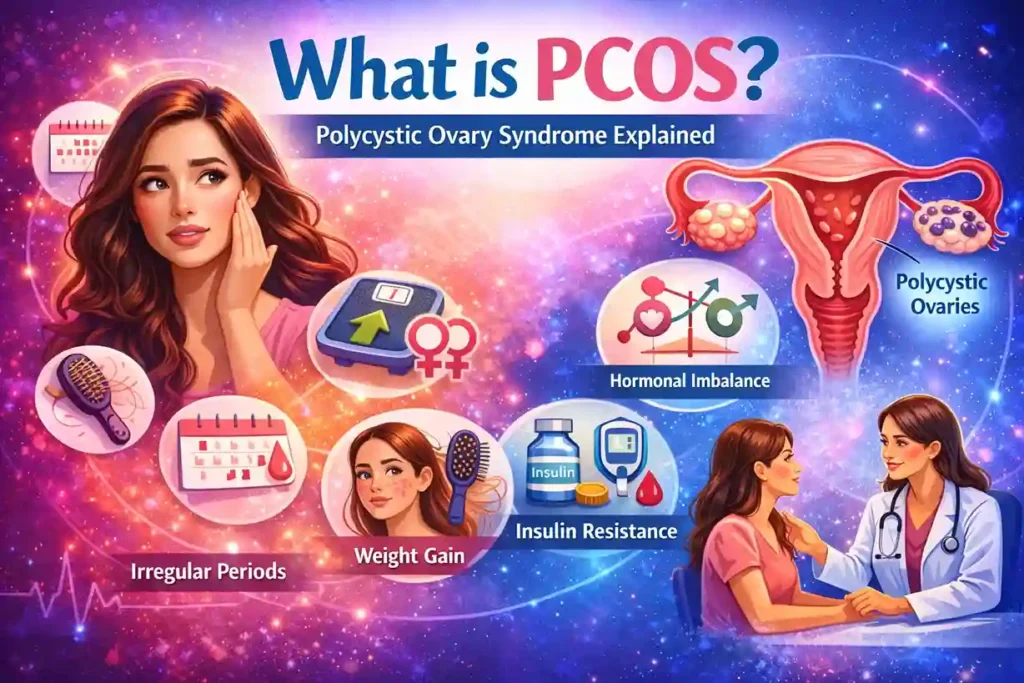
Polycystic Ovary Syndrome (PCOS) is a long-term hormonal and metabolic condition that affects how the ovaries function and how the body responds to hormones like insulin and androgens (Teede et al., 2023).
Despite its name, PCOS is not just a problem with the ovaries. It is a whole-body condition that can influence:
- Menstrual cycles
- Ovulation and fertility
- Skin and hair
- Weight regulation
- Blood sugar levels
- Long-term heart and metabolic health
PCOS affects millions of people worldwide and is one of the most common hormonal conditions in reproductive-age women (ACOG, n.d.; NHS, n.d.).
Why PCOS is so often misunderstood
One of the biggest problems with PCOS is how poorly it is explained.
Many people assume:
- PCOS means you have ovarian cysts
- PCOS only affects overweight women
- PCOS always causes infertility
- PCOS can be “fixed” with one pill
None of these are entirely true.
The term “polycystic” refers to many small, immature follicles in the ovaries — not harmful cysts. Some people with PCOS are thin. Many conceive naturally or with minimal treatment. PCOS cannot be “cured,” it can be managed effectively with the right approach (Teede et al., 2023).
Common signs and symptoms of PCOS
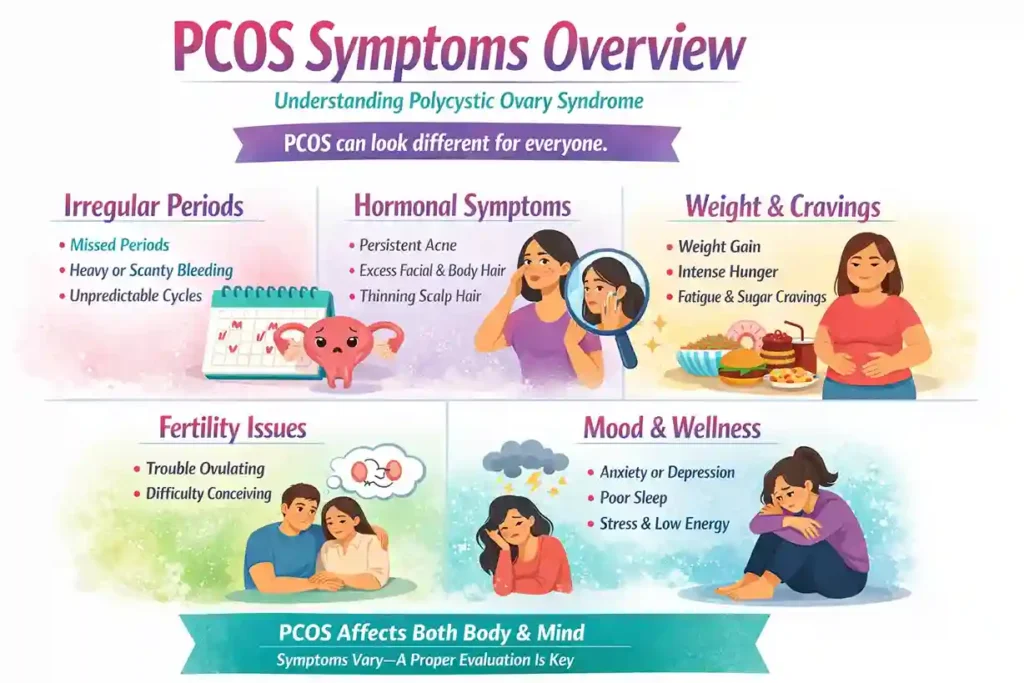
PCOS does not look the same in everyone. Some people have mild symptoms; others experience daily challenges.
Menstrual and ovulation changes
- Irregular periods
- Missed periods
- Difficulty predicting ovulation
Hormonal (androgen-related) symptoms
- Acne that persists beyond adolescence
- Excess facial or body hair (hirsutism)
- Thinning scalp hair
Metabolic symptoms
- Weight gain or difficulty losing weight
- Strong cravings or energy crashes
- Darkened skin patches (acanthosis nigricans)
Emotional and mental health impact
Living with unexplained symptoms can take a toll. Higher rates of anxiety, depression, and reduced quality of life are seen in people with PCOS, independent of body size (Teede et al., 2023).
If several of these feel familiar, PCOS may be part of the picture — but only a proper evaluation can confirm it.
What causes PCOS?
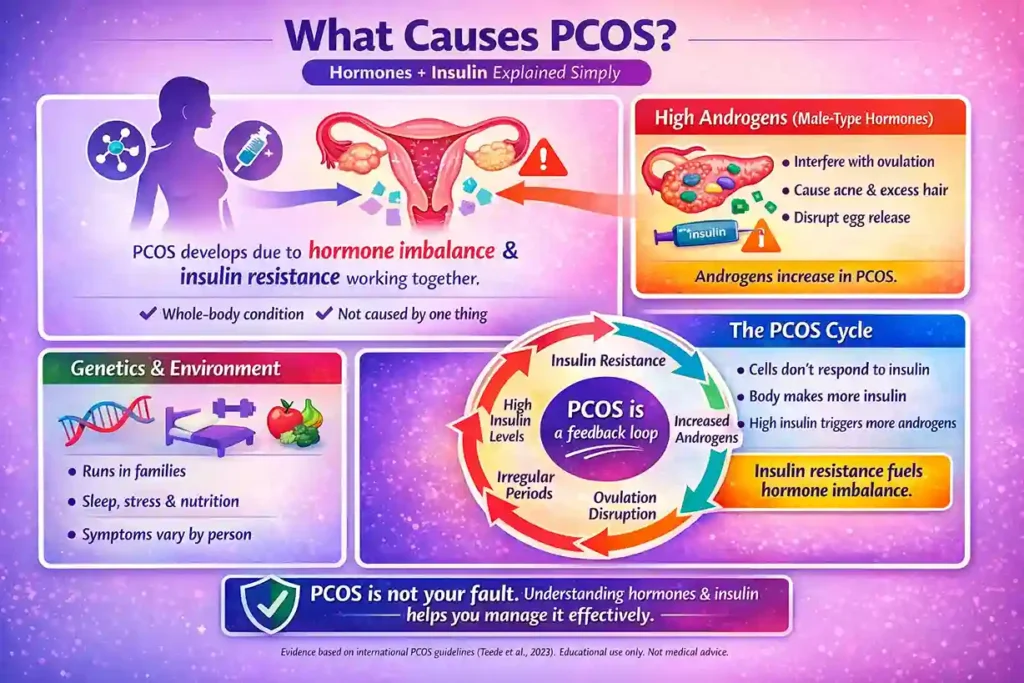
PCOS develops due to a combination of factors, not a single cause.
Hormonal imbalance
Many people with PCOS produce higher-than-normal levels of androgens. These hormones can interfere with ovulation and contribute to acne and excess hair growth (ACOG, n.d.).
Insulin resistance
Insulin resistance is one of the most important drivers of PCOS. When the body does not respond well to insulin, insulin levels rise. High insulin can increase androgen production and disrupt normal ovarian function (Teede et al., 2023).
Genetics and environment
PCOS often runs in families. Lifestyle, stress, sleep, and metabolic health can influence how strongly PCOS symptoms appear over time.
How is PCOS diagnosed?
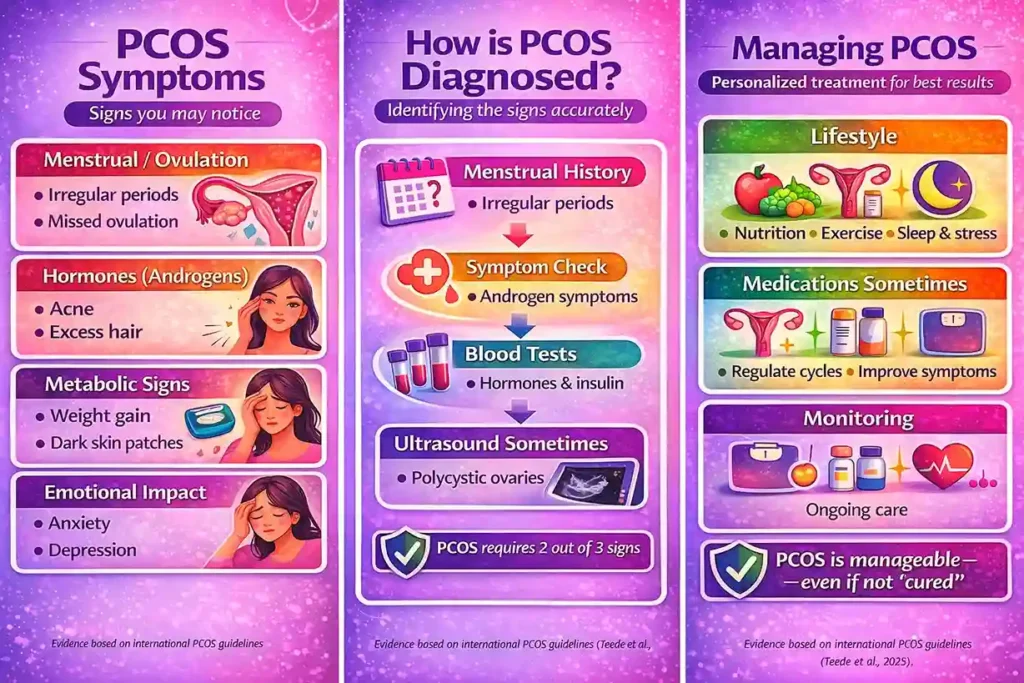
There is no single test for PCOS.
Doctors use a combination of:
- Menstrual history
- Physical symptoms
- Blood tests
- Sometimes ultrasound
According to international guidelines, PCOS is diagnosed when two of the following three features are present, after excluding other conditions (Teede et al., 2023):
- Irregular or absent ovulation
- Signs of excess androgens (clinical or blood-based)
- Polycystic ovarian appearance on ultrasound
Importantly, you do not need all three to have PCOS.
Is PCOS dangerous?
PCOS is not dangerous in the short term, but it does require long-term attention.
Without proper management, PCOS is associated with higher risks of:
- Prediabetes and type 2 diabetes
- High cholesterol
- High blood pressure
- Endometrial (uterine lining) problems
- Cardiovascular disease later in life
The good news is that early understanding and consistent care dramatically reduce these risks (Teede et al., 2023; Cleveland Clinic, n.d.).
Can PCOS be treated?
PCOS cannot be cured in the traditional sense, but it can be managed very successfully.
Treatment is goal-based, meaning it depends on what matters most to you right now:
- Regulating periods
- Improving skin or hair symptoms
- Supporting fertility
- Managing weight or blood sugar
- Reducing long-term health risks
For most people, care includes a combination of:
- Lifestyle strategies
- Targeted medications when needed
- Ongoing monitoring rather than one-time treatment
There is no single “PCOS pill” — and that’s actually a good thing. It means treatment can be personalized.
Why lifestyle matters so much in PCOS
Lifestyle changes are not about blame or willpower. They work because PCOS is closely tied to how the body processes energy and hormones.
Evidence shows that nutrition, movement, sleep, and stress management can:
- Improve insulin sensitivity
- Support ovulation
- Reduce androgen levels
- Improve metabolic markers
(Teede et al., 2023)
This does not mean extreme dieting or punishing exercise. Sustainable, evidence-based approaches work best.
PCOS and fertility
PCOS is one of the most common causes of ovulation-related infertility — but it is also one of the most treatable.
Many people with PCOS:
- Ovulate naturally at times
- Conceive with simple ovulation-induction treatments
- Have healthy pregnancies
Modern guidelines recommend specific, evidence-based fertility treatments when needed, and outcomes are generally very good with appropriate care (Teede et al., 2023).
How this website will help you
This site is designed to give you clarity, not confusion.
Here, you’ll find:
- Clear explanations grounded in medical science
- Evidence-based lifestyle guidance
- Honest discussions about medications and supplements
- Fertility and long-term health information
- Content written and reviewed by medical professionals
The most important thing to remember
PCOS is not your fault.
You didn’t cause it.
And you are not powerless against it.
With accurate information, supportive care, and a plan that fits your life, PCOS can be managed — and your health can move forward.
Medical Disclaimer
This content is for educational purposes only and does not replace professional medical advice, diagnosis, or treatment. Always consult a qualified healthcare provider for personal medical concerns.
Frequently Asked Questions (FAQs)
1. What is PCOS in simple words?
PCOS is a hormonal condition where the body makes higher levels of certain hormones and often does not ovulate regularly, affecting periods, metabolism, and fertility.
2. Is PCOS a serious condition?
PCOS is not life-threatening, but it can affect long-term health if unmanaged. With proper care, most people live healthy, normal lives.
3. Can PCOS be cured permanently?
PCOS cannot be cured, but its symptoms can be managed effectively through lifestyle changes, medical treatment, and regular monitoring.
4. Can you get pregnant if you have PCOS?
Yes. Many people with PCOS conceive naturally or with simple fertility treatments that help regulate ovulation.
5. Does PCOS always cause weight gain?
No. Some people with PCOS are thin. Weight changes depend on insulin sensitivity, genetics, and lifestyle, not PCOS alone.
6. How is PCOS diagnosed?
PCOS is diagnosed using medical history, symptoms, blood tests, and sometimes ultrasound—not a single test.
References
American College of Obstetricians and Gynecologists. (n.d.). Polycystic ovary syndrome (PCOS). https://www.acog.org/womens-health/faqs/polycystic-ovary-syndrome
Cleveland Clinic. (n.d.). Polycystic ovary syndrome (PCOS). https://my.clevelandclinic.org/health/diseases/8316-polycystic-ovary-syndrome-pcos
National Health Service. (n.d.). Polycystic ovary syndrome (PCOS). https://www.nhs.uk/conditions/polycystic-ovary-syndrome-pcos/
Teede, H. J., Joham, A. E., Paul, E., Moran, L. J., Loxton, D., Jolley, D., & Boyle, J. (2023). Recommendations from the 2023 international evidence-based guideline for the assessment and management of polycystic ovary syndrome. The Journal of Clinical Endocrinology & Metabolism, 108(10), 2447–2470. https://doi.org/10.1210/clinem/dgad281