Cortisol, Stress & PCOS Connection: The Neuroendocrine Loop That Intensifies PCOS
Written by: Dr. Muhammad Ihsan Ullah, PhD
Medically reviewed by: Dr. Hafiz Muhammad Kashif, MD
Last updated on February 04,2026
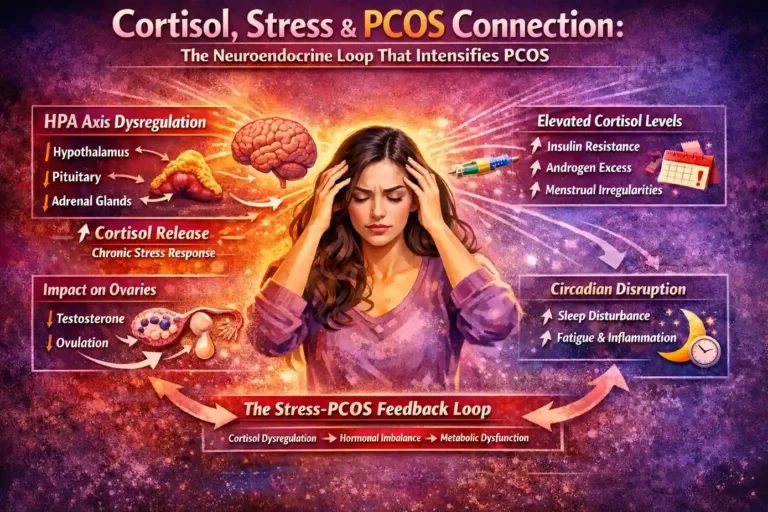
Stress is not merely emotional strain. Stress is a biological signal translated through cortisol, the primary glucocorticoid hormone released by the adrenal glands under regulation of the hypothalamic-pituitary-adrenal (HPA) axis. In women with polycystic ovary syndrome (PCOS), this stress–cortisol signaling system shows measurable dysregulation that can intensify metabolic, reproductive, and neuroendocrine instability.
Recent research confirms that the cortisol–stress–PCOS connection is not a theoretical concept. It is a documented physiological loop in which chronic psychological stress alters HPA axis signaling, disrupts cortisol rhythms, worsens insulin resistance, amplifies androgen activity, and further destabilizes PCOS expression (Norman, R. J., et al. 2023).
How Cortisol Interacts With the HPA Axis in PCOS
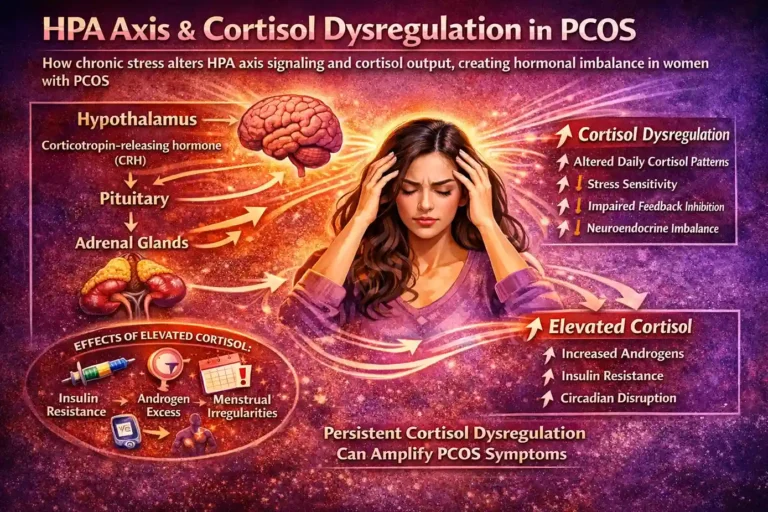
The HPA axis is the body’s central stress-response network. Activation begins in the hypothalamus, progresses through pituitary release of adrenocorticotropic hormone (ACTH), and culminates in adrenal cortisol secretion. Under healthy conditions, cortisol follows a precise circadian rhythm, peaking in the early morning and declining toward night.
In PCOS, emerging integrative models describe neuroendocrine dysregulation involving altered glucocorticoid receptor signaling, impaired feedback inhibition, and increased stress sensitivity of the HPA axis (Anderson, G., 2024). This altered responsiveness makes cortisol output more reactive to psychological, metabolic, and inflammatory stressors common in PCOS.
Stress-Induced Cortisol Dysregulation in Women With PCOS
A central question patients ask is whether stress increases cortisol in PCOS. Meta-analytic data indicate that women with PCOS exhibit significantly higher circulating cortisol levels compared with controls, particularly in serum measurements, although patterns vary across individuals (Benjamin, J. J., et al. 2021).
This variability reflects cortisol dysregulation, not uniform elevation. Many women demonstrate abnormal diurnal patterns rather than consistently high values. Chronic psychological stress, sleep disruption, and metabolic strain amplify HPA activity, creating sustained cortisol signaling that perpetuates endocrine imbalance (Norman, R. J., et al. 2023).
Elevated Cortisol Levels and Ovarian Hormone Imbalance
Cortisol influences ovarian function indirectly through metabolic and neuroendocrine pathways. Sustained cortisol exposure alters glucose metabolism, promotes insulin resistance, and shifts ovarian steroidogenesis toward hyperandrogenism. These effects do not cause PCOS but exacerbate its hormonal phenotype, especially in stress-vulnerable individuals.
Clinical reviews emphasize that cortisol acts as a hormonal amplifier, intensifying ovarian dysfunction when metabolic and inflammatory stressors are already present (Teede, H. J., et al. 2023).
Cortisol, Insulin Resistance, and Androgen Excess in PCOS
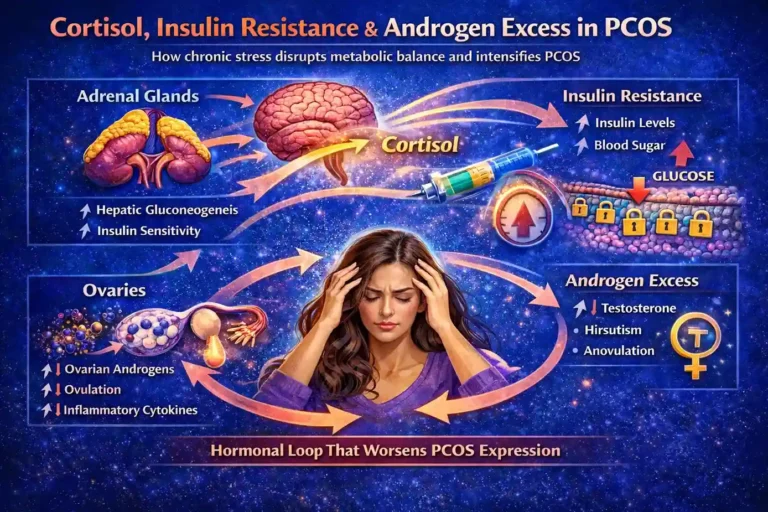
Cortisol increases hepatic gluconeogenesis and antagonizes insulin action. In PCOS where insulin resistance is highly prevalent this effect becomes clinically relevant. Elevated insulin levels enhance ovarian androgen production, reinforcing the hormonal loop linking cortisol, insulin resistance, and androgen excess.
This triad explains why stress hormones worsen PCOS imbalance and why cortisol-focused discussions frequently overlap with metabolic deterioration in PCOS populations (Norman, R. J., et al. 2023).
Chronic Psychological Stress and PCOS Hormonal Instability
Psychological stress activates the sympathetic nervous system and the HPA axis simultaneously. Studies show that women with PCOS experience higher perceived stress, anxiety, and depressive symptoms, which correlate with worsened endocrine and metabolic parameters (Dube-Zinatelli, E., et al. 2025).
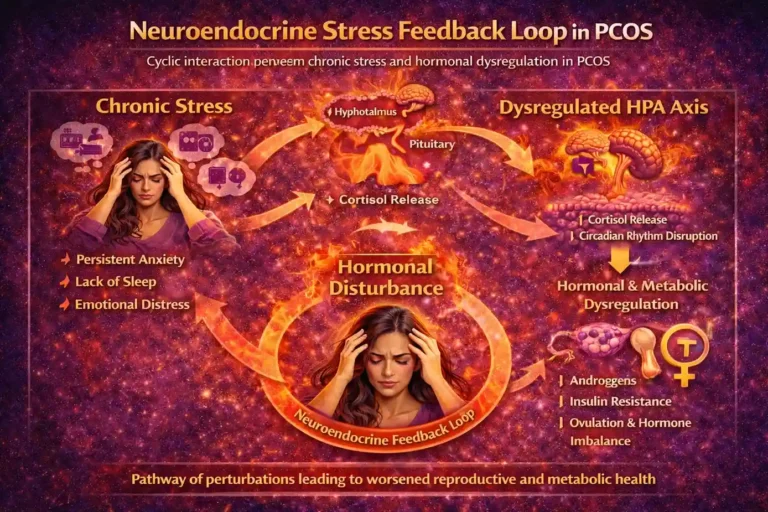
Chronic stress maintains cortisol signaling, increases inflammatory mediators, and interferes with hypothalamic hormone regulation, reinforcing the stress PCOS feedback loop (Li, L., et al. 2024).
Abnormal Cortisol Awakening Response in PCOS
The cortisol awakening response (CAR) is a sensitive indicator of HPA axis tone. In PCOS, research suggests altered CAR patterns reflecting impaired circadian regulation and heightened stress reactivity. These abnormalities may contribute to fatigue, metabolic instability, and impaired hormonal recovery across the day (Anderson, G., 2024).
CAR disruption illustrates why cortisol dysregulation in PCOS is often temporal rather than absolute.
Cortisol Rhythm Disruption and Circadian Hormone Imbalance
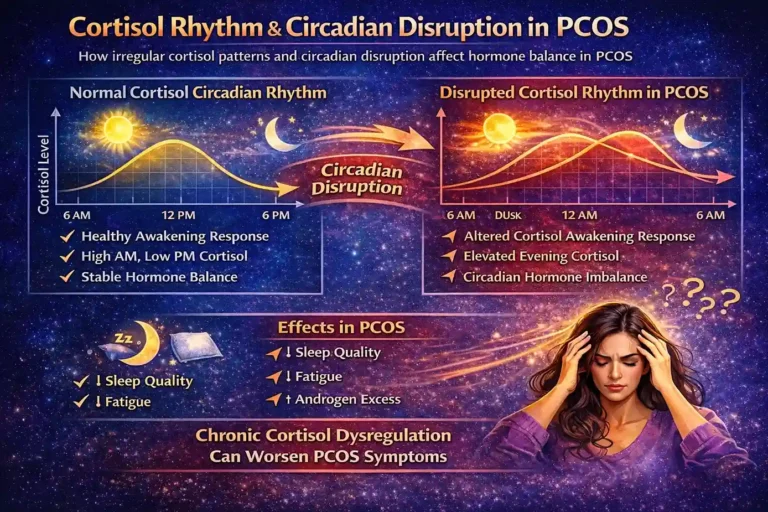
A 2025 systematic review and meta-analysis identified circadian rhythm disruption as a significant feature of PCOS, including higher evening cortisol levels and reduced sleep efficiency (Heydari, T., et al. 2025).
Elevated evening cortisol prevents adequate nocturnal recovery, worsens insulin sensitivity, and perpetuates low-grade inflammation. This circadian imbalance strengthens the biological basis of stress-related PCOS worsening and explains patient-reported symptom flares during sleep disruption.
Relationship Between Cortisol and DHEA-S in PCOS
The adrenal glands produce both cortisol and DHEA-S, an adrenal androgen. Clinical studies demonstrate that some women with PCOS show elevations in both markers, suggesting heightened adrenal activity under chronic stress (Benjamin, J. J., et al. 2023).
While adrenal involvement does not redefine PCOS classification, it highlights the role of adrenal stress physiology in modulating PCOS severity.
Stress-Driven Inflammation Mediated by Cortisol
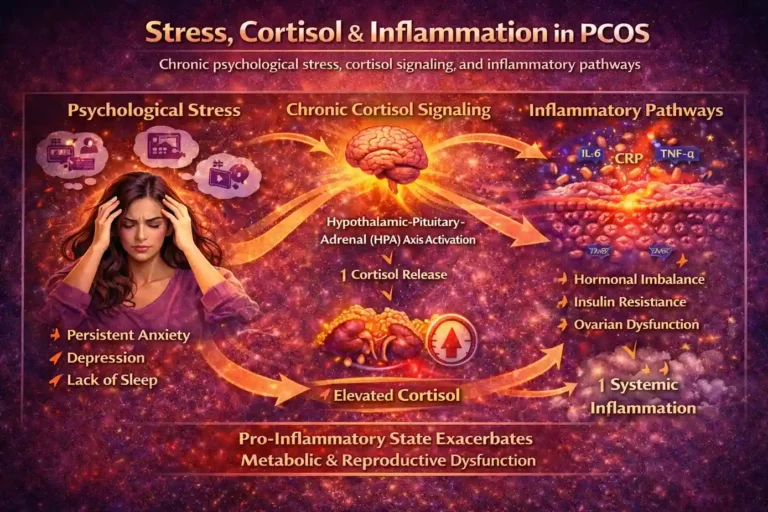
Although cortisol is acutely anti-inflammatory, chronic stress alters immune signaling. Sustained HPA activation may coexist with elevated inflammatory cytokines, contributing to low-grade inflammation observed in PCOS (Li, L., et al. 2024).
This inflammatory-neuroendocrine interaction further destabilizes metabolic and reproductive homeostasis.
Cortisol Effects on Ovulation and Menstrual Regularity
Cortisol indirectly alters ovulatory stability by affecting hypothalamic signaling, metabolic control, and circadian rhythms. Stress-related cortisol dysregulation pushes the endocrine environment away from ovulatory balance, particularly in women with pre-existing PCOS vulnerability (Teede, H. J., et al. 2023).
Neuroendocrine Stress Response in PCOS Pathophysiology
Modern PCOS models recognize the disorder as a neuroendocrine-metabolic condition, not solely ovarian. HPA axis dysregulation, insulin resistance, inflammation, and psychological stress converge to influence disease expression (Anderson, G., 2024).
International guidelines emphasize routine psychological screening in PCOS due to the strong biological links between stress physiology and disease burden (Norman, R. J., et al. 2023).
Why Stress Regulation Alters Cortisol-Driven PCOS Progression
Stress regulation does not cure PCOS, but it modifies the biological terrain in which PCOS develops. Improving cortisol rhythm especially reducing evening cortisol and restoring circadian alignment can lessen metabolic strain and stabilize endocrine signaling (Heydari, T., et al. 2025).
This approach is not optional; it is embedded in evidence-based PCOS care (Teede, H. J., et al. 2023).
Medical Disclaimer
This article is intended for educational purposes only. It does not provide medical advice, diagnosis, or treatment. PCOS and stress-related hormonal changes can vary significantly between individuals. Always consult a qualified healthcare professional for personalized evaluation and care.
Frequently Asked Questions (FAQs)
1.Does stress increase cortisol levels in women with PCOS?
Yes. Chronic stress can over stimulate the HPA axis in women with PCOS, leading to cortisol dysregulation. This may appear as elevated cortisol or abnormal daily cortisol patterns rather than constant high levels.
2.Is cortisol always high in PCOS?
No. Many women with PCOS experience disrupted cortisol rhythms instead of persistently high cortisol. Timing abnormalities, such as elevated evening cortisol, can still affect hormonal balance.
3.How does cortisol worsen PCOS symptoms?
Cortisol can worsen insulin resistance, increase androgen activity, and disrupt circadian hormone regulation. Together, these effects can intensify metabolic and reproductive instability in PCOS.
4.Can cortisol affect ovulation in PCOS?
Yes. Stress-related cortisol dysregulation can interfere with neuroendocrine signaling and metabolic control, making ovulation less regular in women with PCOS.
5.Why do PCOS symptoms flare during stressful periods?
Stress activates hormonal, metabolic, and inflammatory pathways that amplify existing PCOS vulnerabilities, creating a biological feedback loop that worsens symptoms.
References
- Norman, R. J., Teede, H. J., Gibson-Helm, M., & Dokras, A. (2023).International evidence-based guideline for the assessment and management of polycystic ovary syndrome. Journal of Clinical Endocrinology & Metabolism, 108(10), 2447–2469. https://doi.org/10.1210/clinem/dgad245
- Anderson, G. (2024).Polycystic ovary syndrome pathophysiology: Integrating systemic, CNS and circadian processes. Frontiers in Bioscience (Landmark Edition), 29(1), 24. https://doi.org/10.31083/j.fbl2901024
- Heydari, T., Ramdass, P. V. A. K., & Choudhury, S. (2025).Circadian rhythm disruption and polycystic ovary syndrome: A systematic review and meta-analysis. AJOG Global Reports, 5(2), 100479. https://doi.org/10.1016/j.xagr.2025.100479
- Dube-Zinatelli, E., Anderson, F., & Ismail, N. (2025).Neurobiological mechanisms underlying depression in polycystic ovary syndrome. Frontiers in Neuroendocrinology, 78, 101203. https://doi.org/10.1016/j.yfrne.2025.101203
- Li, L., Kang, X., Chen, X., Niu, Y., Wang, Y., & Yang, X. (2024).Psychological stress, inflammation, and lifestyle factors in polycystic ovary syndrome. Frontiers in Public Health, 12, 1361962. https://doi.org/10.3389/fpubh.2024.1361962