

Inflammation and PCOS
Written by: Dr. Muhammad Ihsan Ullah, PhD
Medically reviewed by: Dr. Hafiz Muhammad Kashif, MD
Last updated on February 19,2026
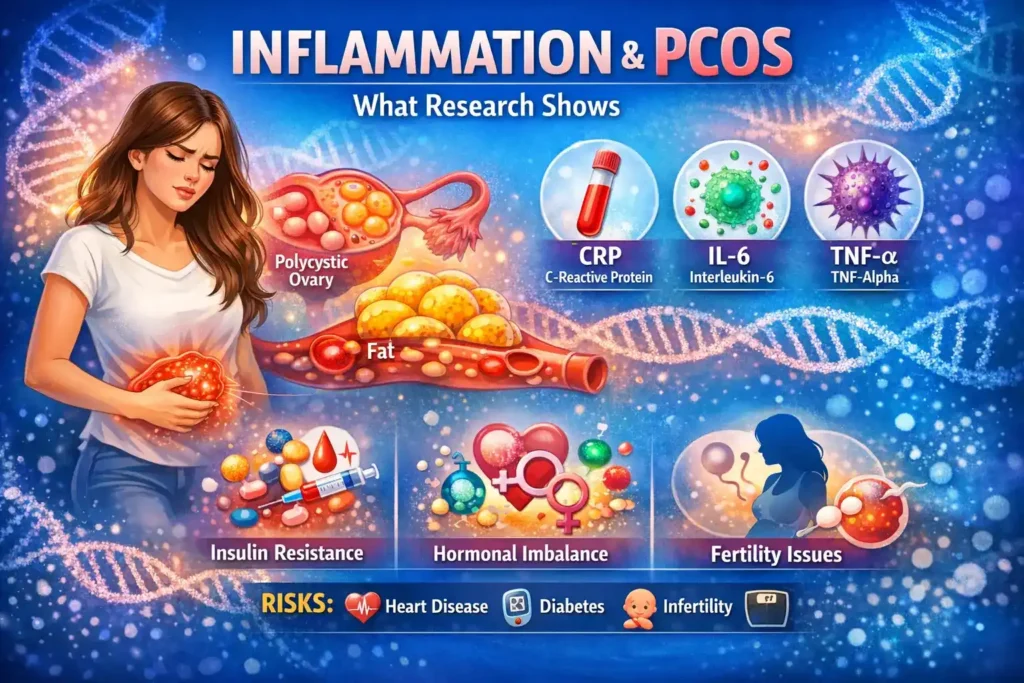
Polycystic Ovary Syndrome (PCOS) is not just a reproductive disorder—it’s increasingly recognized as a condition driven by chronic low‑grade inflammation, which plays a central role in its metabolic and hormonal consequences. Scientific research now confirms that inflammatory pathways and immune‑inflammatory markers such as C‑reactive protein (CRP), interleukin‑6 (IL‑6), and tumor necrosis factor‑alpha (TNF‑α) are consistently elevated in women with PCOS compared with healthy controls (Bansal, B., et al. 2025).
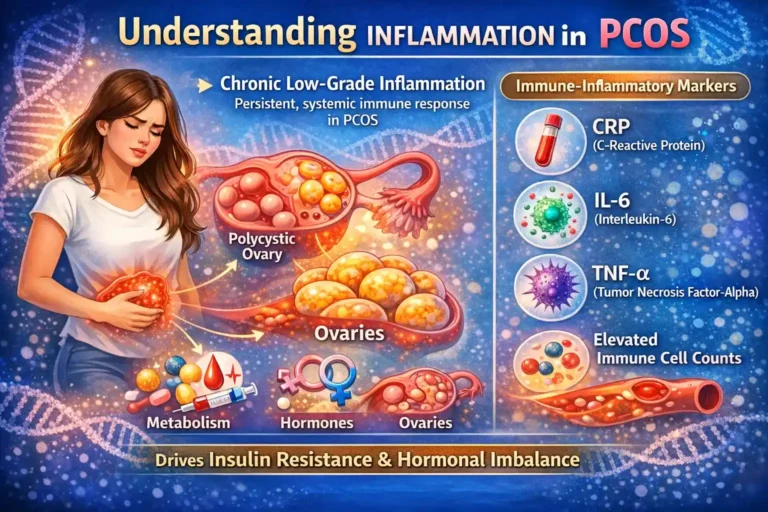
This article provides an evidence‑based and medically accurate explanation of the latest research on inflammation and PCOS — focusing on its mechanisms, clinical impact, and relevance for modern PCOS management.
📌 What Is Chronic Low Grade Inflammation in PCOS?
Chronic low‑grade inflammation refers to a persistent, systemic immune response that doesn’t resolve like typical “acute inflammation” from injury or infection. In PCOS, this persistent inflammation is subtle but significant enough to impact hormonal signaling, metabolism, and overall health.
Women with PCOS often show increases in:
- CRP (C‑reactive protein) — a key marker of systemic inflammation
- IL‑6 (interleukin‑6) — pro‑inflammatory cytokine linked to metabolic dysfunction
- TNF‑α (tumor necrosis factor‑alpha) — contributes to insulin resistance
- Elevated circulating leukocytes and immune cell ratios (e.g., NLR, SII) (Aubead, N. M., et al. 2025).
Inflammation in PCOS is not merely a consequence — it’s a driver of insulin resistance, metabolic dysfunction, and hormonal imbalance, making it a central piece in understanding PCOS pathophysiology.
🔬 Scientific Evidence of Inflammatory Markers in PCOS

A growing number of high‑quality studies have confirmed that inflammatory biomarkers are elevated in PCOS and strongly associated with its clinical features.
1.C‑Reactive Protein (CRP)
- CRP is one of the most reliable indicators of chronic systemic inflammation in PCOS.
- Women with PCOS have significantly higher CRP than healthy females, independent of obesity.
- Elevated CRP correlates with insulin resistance, BMI, cardiovascular risk, and metabolic syndrome features (turn0search4).
CRP thus not only indicates inflammation but may also predict cardiometabolic complications in PCOS.
2.Interleukin‑6 (IL‑6)
- IL‑6 is a key pro‑inflammatory cytokine involved in immune regulation and metabolic signaling.
- IL‑6 levels are consistently higher in PCOS populations, and meta‑analyses show significant differences compared with controls.
- IL‑6 is also associated with insulin resistance severity, suggesting inflammation fuels metabolic dysfunction in PCOS.
3.Tumor Necrosis Factor‑Alpha (TNF‑α)
TNF‑α plays a pivotal role in immune activation and metabolic regulation.
- Studies demonstrate elevated TNF‑α in PCOS patients, especially those with concurrent obesity and metabolic disturbance.
- TNF‑α also interacts with fat tissue and insulin signaling, worsening endocrine and metabolic outcomes.
4.Inflammatory Indices: NLR, PLR & SII
Beyond individual cytokines, composite immune scores such as:
- Neutrophil‑to‑Lymphocyte Ratio (NLR)
- Platelet‑to‑Lymphocyte Ratio (PLR)
- Systemic immune‑inflammation index (SII)
are emerging as holistic markers of inflammation in PCOS. Elevated levels of these indices are correlated with PCOS clinical severity.
🧠 How Inflammation Drives PCOS Pathophysiology
Inflammation in PCOS accelerates multiple detrimental mechanisms:
🔹 Insulin Resistance and Metabolic Dysfunction
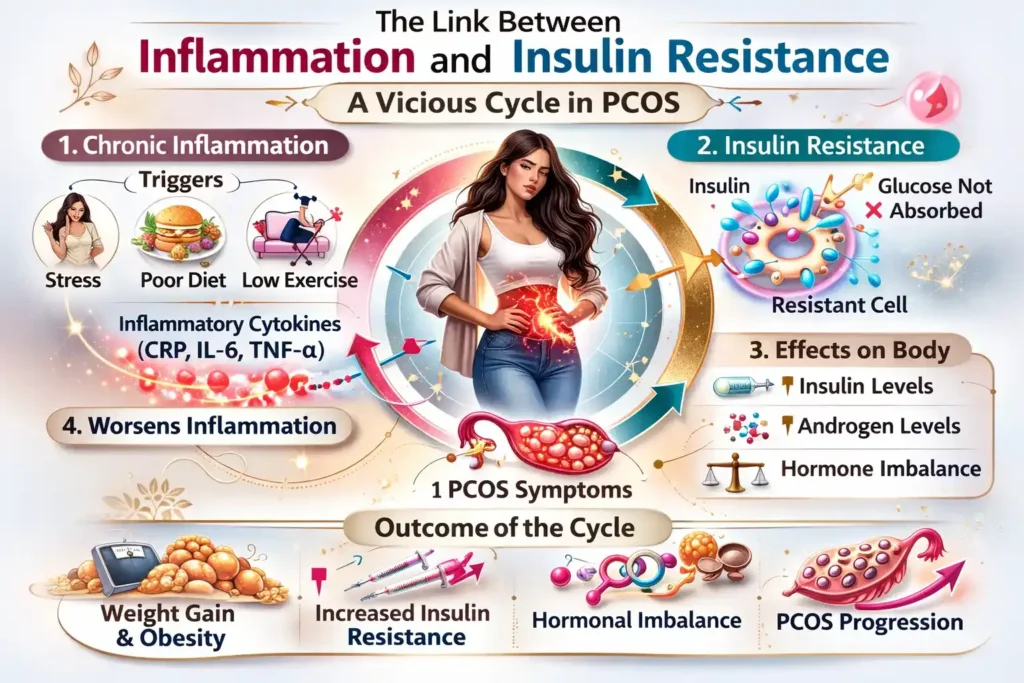
- Pro‑inflammatory cytokines interfere with insulin signaling, making cells less responsive to insulin.
- As insulin resistance increases, the body produces more insulin, which stimulates androgen production — worsening PCOS symptoms.
- This vicious cycle links inflammation directly to metabolic dysfunction, including higher triglycerides, glucose intolerance, and abdominal fat deposits.
🔹 Adipose Tissue as an Inflammation Source
Visceral fat is not passive — it releases inflammatory mediators (e.g., IL‑6, TNF‑α, leptin) that perpetuate systemic low-grade inflammation and worsen insulin resistance (Bansal, B., et al. 2025).
🔹 Ovarian and Reproductive Impact
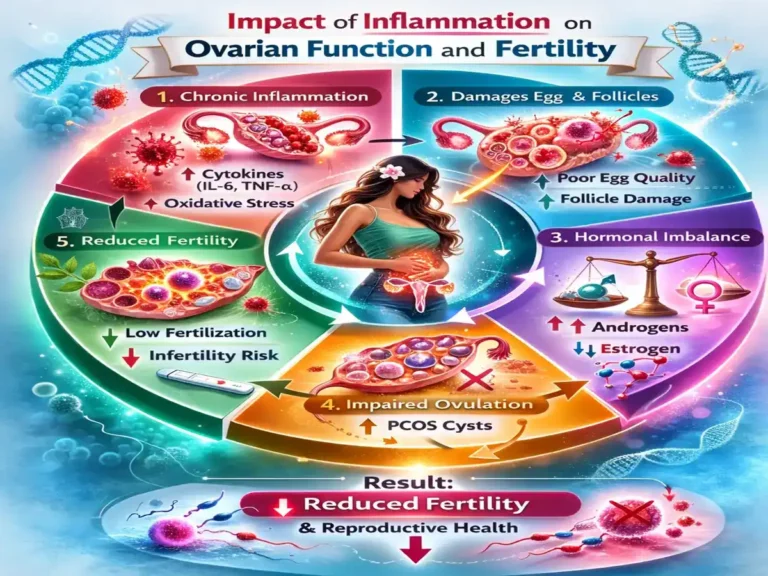
Inflammatory processes may also disrupt local ovarian environments:
- Cytokines like IL‑6 and TNF‑α influence follicular development and granulosa cell health.
- Increased inflammation can impair oocyte quality and ovulation, contributing to anovulation and infertility common in PCOS patients.
Clinical Implications of Inflammation in PCOS
📌 Cardiovascular and Metabolic Risk
Women with PCOS and elevated inflammatory markers have a higher risk for:
- Cardiovascular disease (CVD)
- Type 2 diabetes
- Dyslipidemia
- Hypertension
Inflammation contributes to endothelial dysfunction and metabolic derangements, making a strong case for targeting inflammation in PCOS management strategies.
📈 Latest Research Trends and Emerging Perspectives
Cutting‑Edge Research
- Systematic reviews emphasize chronic inflammation as a core factor in PCOS pathogenesis, especially through elevated IL‑6 and CRP.
- Composite immune indices such as SII and NLR are gaining recognition as better holistic markers for predicting PCOS severity and metabolic risk.
- New studies suggest microecological (gut flora) imbalance and steroid hormone dysregulation also fuel inflammatory responses in PCOS – highlighting multi‑organ involvement.
Future Directions
Current research is pushing toward:
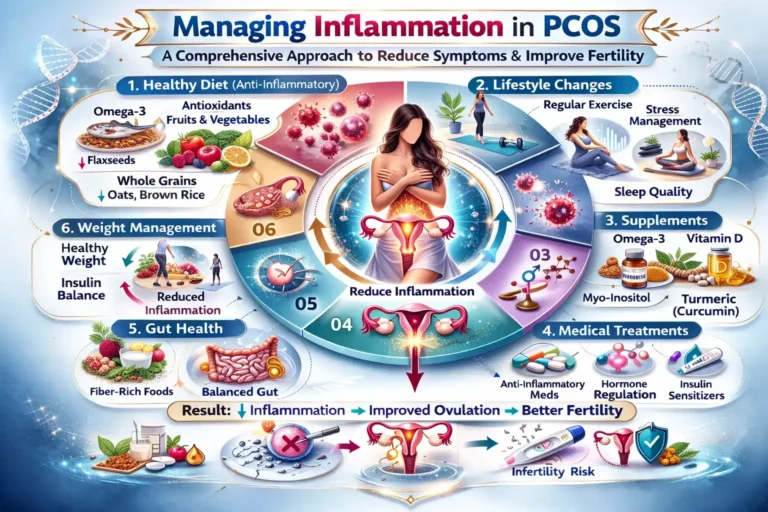
- Targeted anti‑inflammatory therapies
- Advanced biomarkers for personalized risk profiling
- Integration of lifestyle interventions (anti‑inflammatory diets, exercise)
Summary: Inflammation is Central to PCOS
Inflammation is not a side effect — it’s a core driver of both metabolic and reproductive dysfunction in PCOS.
Elevated markers like CRP, IL‑6, TNF‑α, and immune indices (NLR, PLR, SII) are strongly associated with the condition — from insulin resistance to hormonal imbalance.
Understanding these inflammatory pathways gives clinicians and patients a powerful roadmap for targeting the root causes of PCOS, not just its symptoms.
Medical Disclaimer:
The information provided in this article is for educational purposes only and is not intended to diagnose, treat, or replace professional medical advice. Always consult with a healthcare provider or qualified medical professional before making any changes to your treatment plan or lifestyle. The content presented here should not be used as a substitute for medical advice from your physician.
Frequently Asked Questions (FAQS)
1. How does inflammation affect PCOS?
Inflammation worsens insulin resistance, hormonal imbalance, and increases PCOS symptoms.
2. What inflammatory markers are linked to PCOS?
CRP, IL-6, and TNF-α are commonly elevated in PCOS.
3. Can inflammation in PCOS be reduced?
Yes, with a healthy diet, regular exercise, and sometimes medication.
4. Does inflammation affect fertility in PCOS?
Yes, chronic inflammation can impair ovulation and reduce egg quality.
5. What causes inflammation in PCOS?
Visceral fat, insulin resistance, and immune system dysfunction all contribute to inflammation in PCOS.
References
- Bansal, B., et al. (2025). A systematic review of inflammatory markers in polycystic ovary syndrome (PCOS) and meta‑analysis of interleukin‑6 (IL‑6) in case‑control studies. Cureus. https://pubmed.ncbi.nlm.nih.gov/40385768/
- Aubead, N. M., et al. (2025). Assessment of inflammatory indices in women with PCOS: hsCRP, IL‑6, TNF‑α and leukocyte profiles. Medical Journal of Biological Research. https://journals.lww.com/mjby/fulltext/2025/06001/assessment_of_inflammatory_indices_in_women_with.28.aspx
- Zhou, X., Tian, Y., & Zhang, X. (2024). Correlation and predictive value of systemic immune‑inflammation index for metabolic and endocrine disturbances in PCOS. BMC Womens Health. https://link.springer.com/article/10.1186/s12905-024-03405-4
- Deng, H., Chen, J., Xing, X., Zhang, Y., & Xu, Z. (2024). Systemic low‑grade chronic inflammation and immune dysfunction in PCOS: intrinsic mechanisms and clinical implications. Frontiers in Immunology. https://www.frontiersin.org/journals/immunology/articles/10.3389/fimmu.2024.1470283
- Azarbayjani, K., et al. (2024). Association of dietary inflammatory index with C‑reactive protein and interleukin‑6 in PCOS. Scientific Reports. https://www.nature.com/articles/s41598-024-53958-5